SHIP‑SPECIFIC
Preparation relates to the vessel a crew member is actually joining.
SHIP‑SPECIFIC CREW PREPARATION
C‑Prep is developing a photorealistic approach to prepare crew members for the specific vessel they are about to join—with objective evaluation of their readiness.
THE CHALLENGE
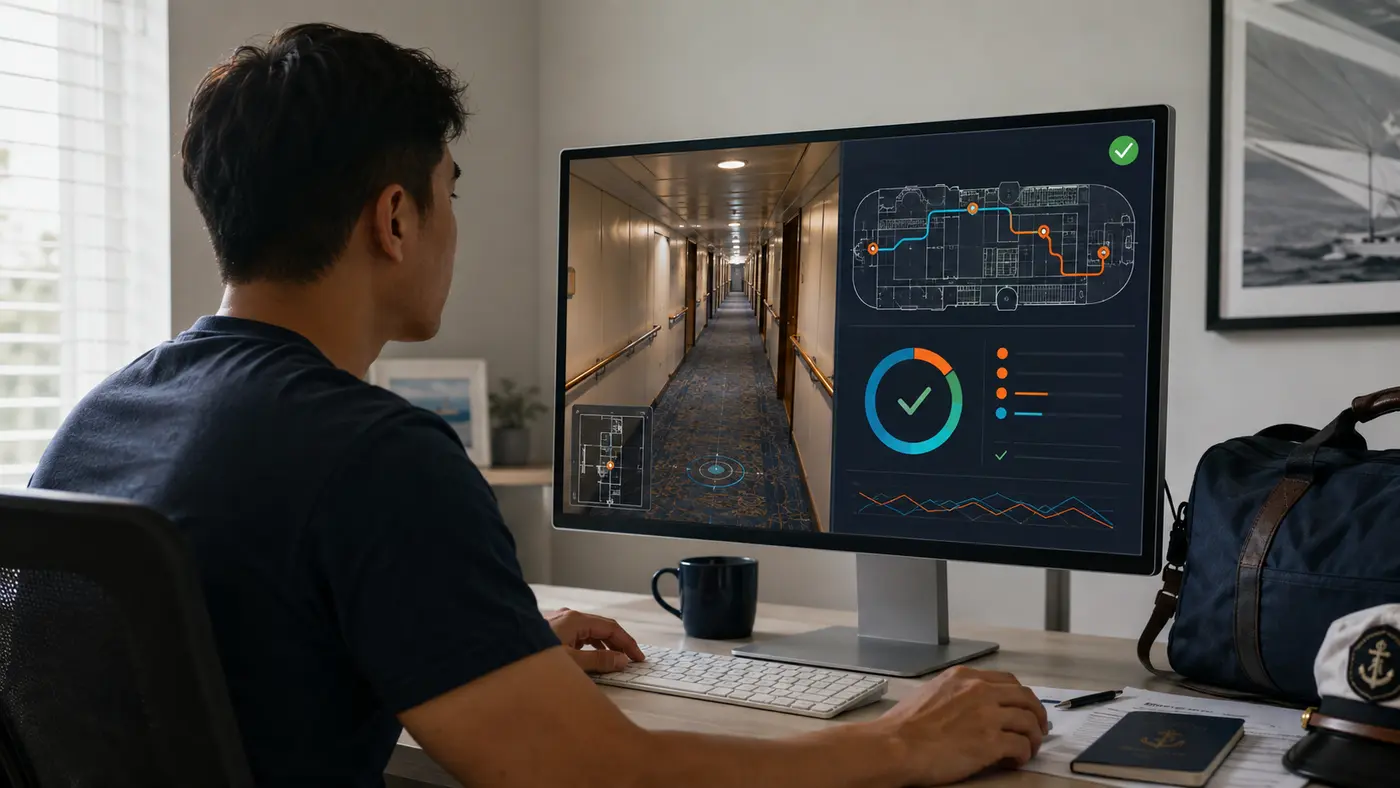
Basic Safety provides an essential common foundation, yet it remains generic. Training quality and emphasis can vary between institutions. Once aboard, crew members must transfer that knowledge to a large, unfamiliar vessel—while also learning a new job and adapting to a new social environment.
THE C‑PREP CONCEPT
C‑Prep brings ship-specific familiarisation into a photorealistic digital environment. Crew members develop an initial spatial understanding of their future vessel before arrival.
Accessible on ordinary smartphones. The training is designed for a device most crew members already own—no private PC is required.
Objective performance evaluation. Routes, decisions, rule compliance and completion time are measured against defined criteria, rather than relying on a subjective trainer impression.
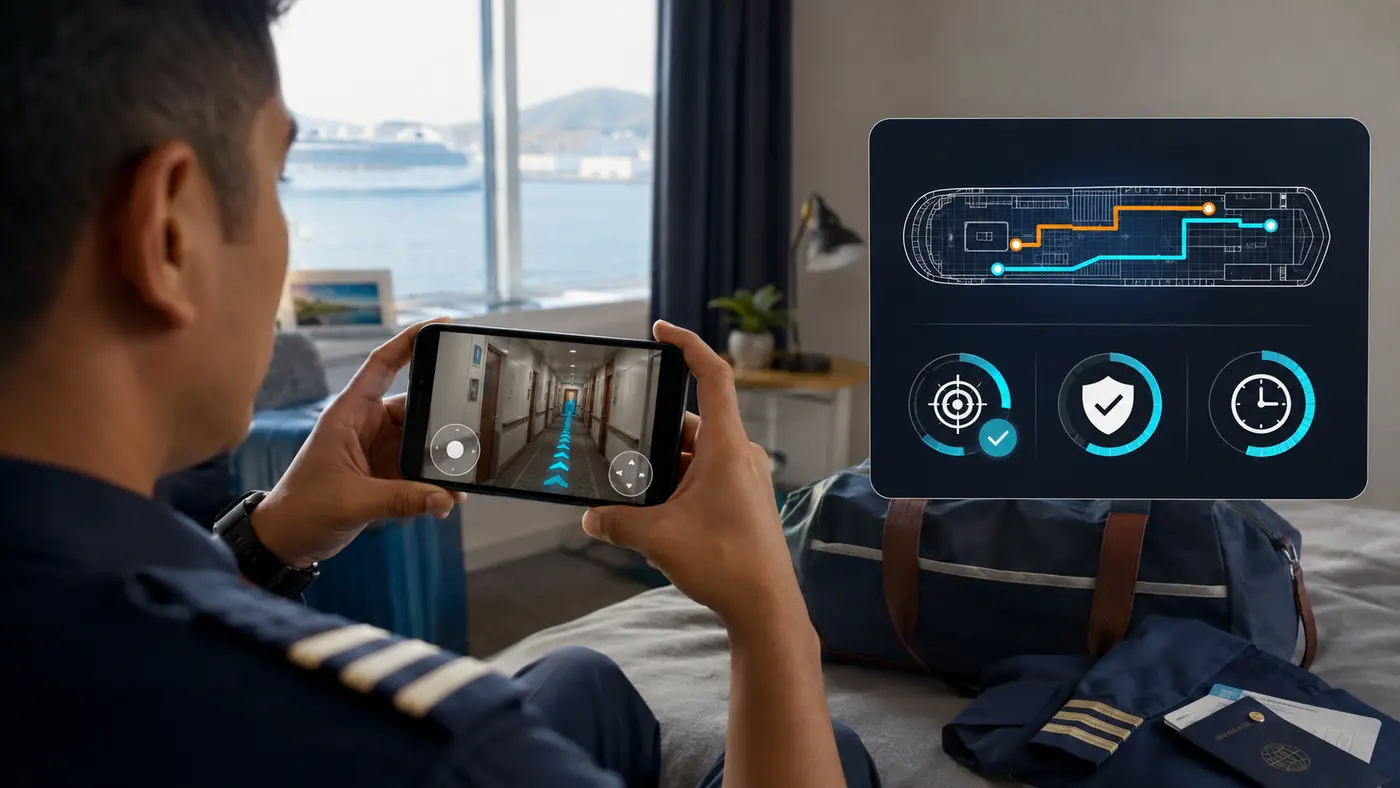
Crew members explore connected corridors, staircases, deck changes and alternative paths. If one route is blocked, they can orient themselves and make a safe decision instead of merely reproducing a memorised line.
Preparation relates to the vessel a crew member is actually joining.
The ship is actively explored as an environment rather than memorised as a plan.
Performance becomes comparable and remaining training needs visible.
FROM CODEWORD TO CORRECT ACTION
Codewords and emergency procedures can differ between ships and operators. C‑Prep places the announcement into the photorealistic clone of the future vessel and asks the crew member to apply the assigned muster role—not merely recall a generic answer.
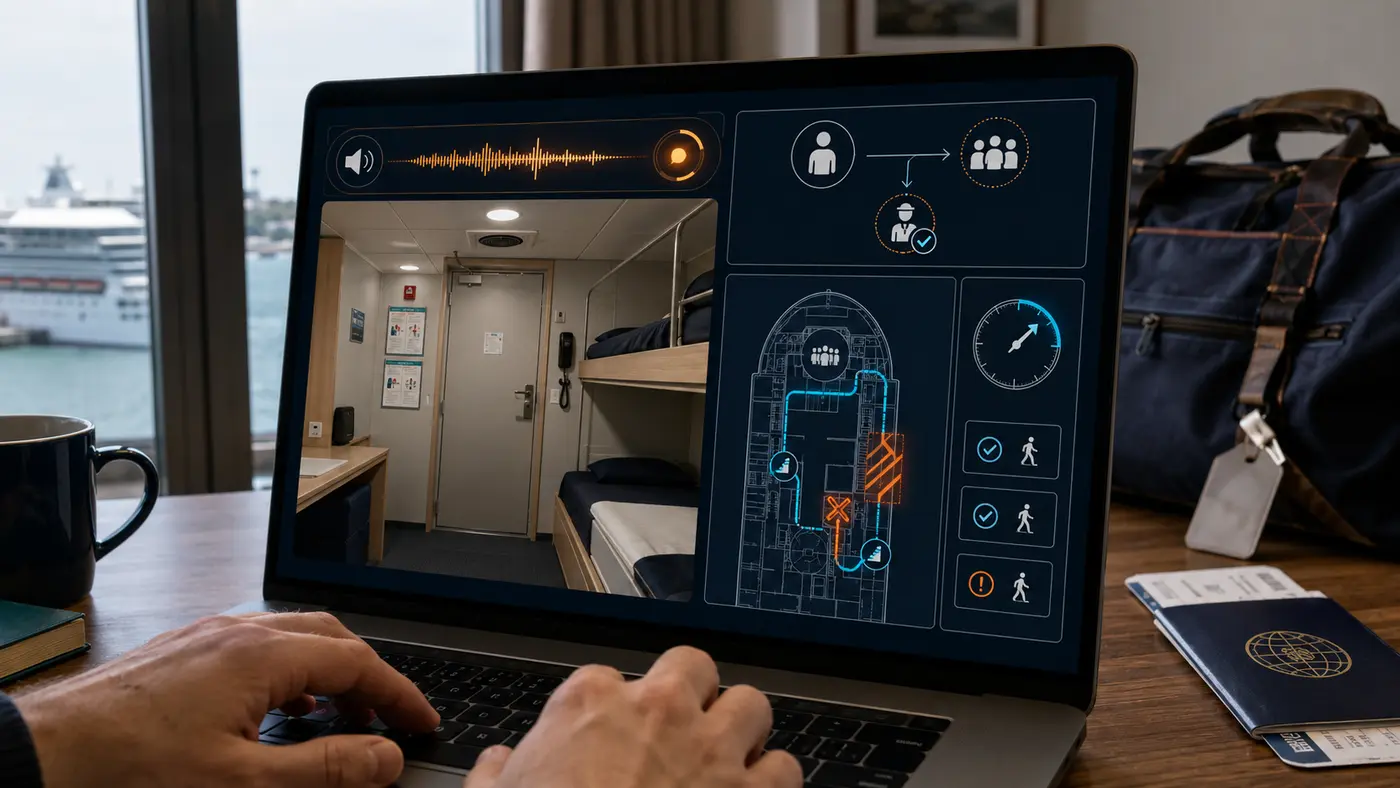
The scenario links a ship-specific codeword to the individual muster role and makes the expected response visible.
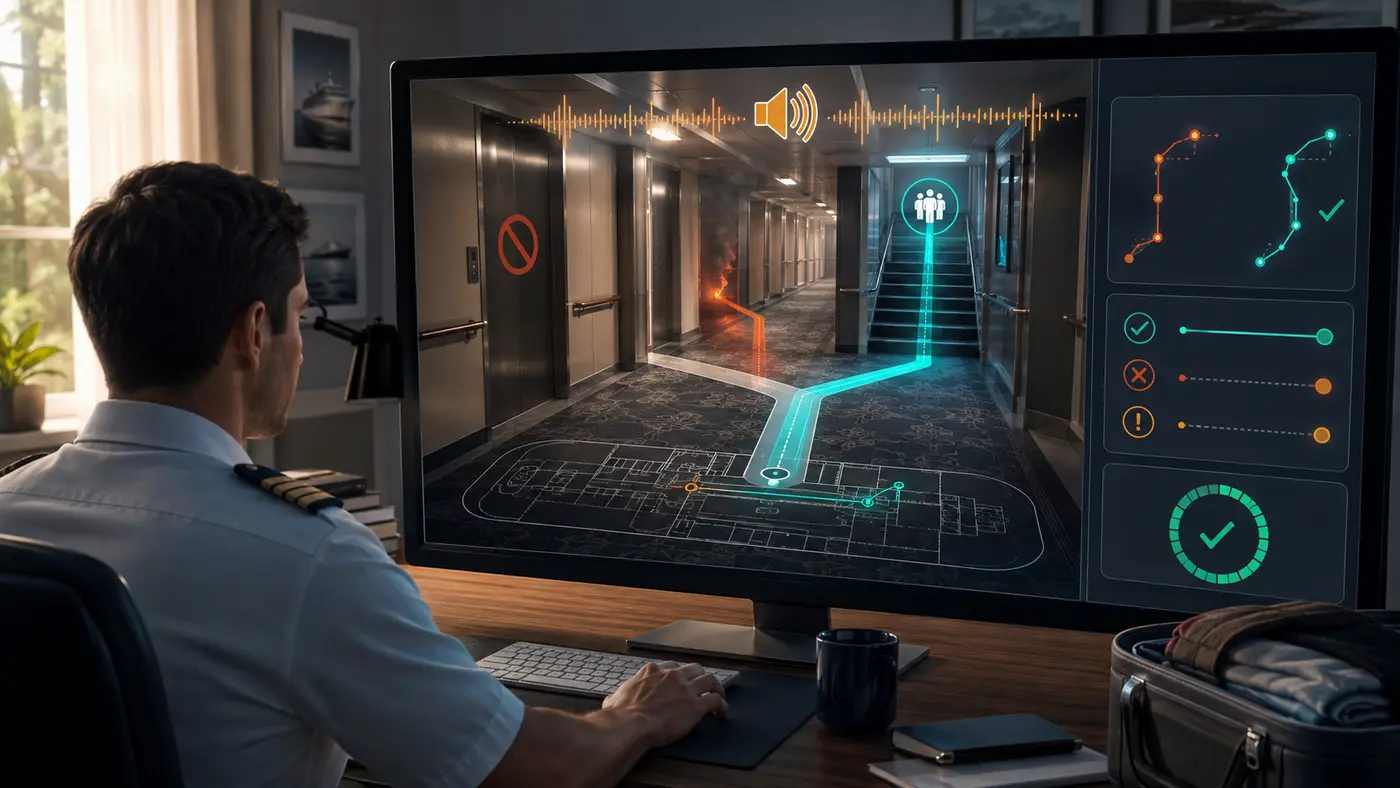
Blocked zones, prohibited elevators and alternative staircases test whether the crew member can orientate and act correctly. The chosen route and decisions are evaluated objectively.
Basic Safety provides the foundation. C‑Prep helps reveal where generic knowledge still needs ship-specific application, feedback or further training before joining.
BEYOND SAFETY
Fewer wrong turns, repeated explanations and interruptions during the first days aboard.
Crew can place real instructions into a spatial context they already recognise.
Onboard time can concentrate on actual conditions, equipment and practical actions.
A comparable assessment shows whether knowledge can be applied on the specific ship.
A CLEAR BOUNDARY
C‑Prep does not replace required training, practical familiarisation or drills. The actual condition of the vessel is always binding.
SUPPORTED BY LEADING INDUSTRY GUIDANCE
The direction is no longer theoretical.
It is already being recommended.
In 2026, the UK Chamber of Shipping—together with the National Maritime Occupational Health and Safety Committee—published dedicated guidance for shipping companies. It explicitly points toward the same practical direction on which C‑Prep is built:
Familiarisation should relate to the actual vessel and take place before crew members begin their duties.
Digital learning is expressly recognised as a useful part of effective familiarisation.
Tests, exercises and performance assessment should be used to demonstrate that familiarisation has been effective.
C‑Prep translates this high-level industry recommendation into a practical product: a photorealistic, ship-specific environment with repeatable scenarios and objective performance data. It does not invent a new safety requirement—it provides a credible way to implement what leading maritime guidance already considers sensible.
Read the official guide: “Safety Familiarisation: Guidelines to Shipping Companies” ↗C‑PREP IS IN DEVELOPMENT
We welcome conversations with cruise operators, maritime specialists, research institutions and technology partners.